Travel Light #1: redefining creativity
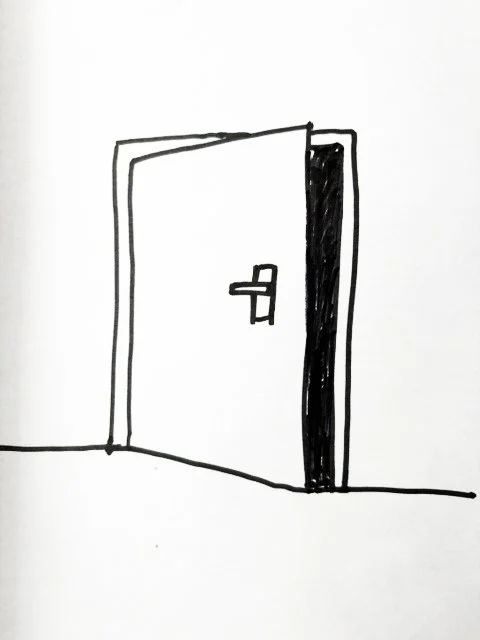
“The cost of not creating isn't dramatic. It's not a single bad decision. It's just years, quietly adding up, of a door you kept meaning to open.”
Most people believe creativity is a personality type, something you either have or don't. Turns out, that belief doesn't hold up.
Beliefs about creativity
In 2021, Associate Professor Mathias Benedek from the University of Graz led a team of researchers to investigate the prevalence of misconceptions about creativity. They surveyed nearly 1,500 participants across six countries, asking whether they believed 15 common statements about creativity were true or false. Statements included:
People have a fixed amount of creativity and cannot do much to change it.
Creative accomplishments are usually the result of a sudden inspiration.
Children are more creative than adults.
All of these statements have been scientifically proven false. Yet, about 50% of those surveyed believed most of these falsehoods to be true.
Consequently, these assumptions reinforce a quiet, corrosive belief: you either possess creativity, or you don't. "Creativity is about creating a novel or original idea," you tell yourself. Judgment and self-criticism creep in. This all-or-nothing mentality can stifle a creative project before it even begins, robbing us of the joy and challenge a creative venture brings.
The word creativity comes from the Latin creare, "to create, to produce," and crescere, "to make grow." Neither word contains an evaluative component. It's the act of producing that counts, not the quality of the outcome.
Ask a different question
What if, instead of asking ourselves, "How creative am I?" we asked, "What are my creative impulses asking me to explore?" In other words, how do we like to engage with creativity, rather than evaluating our creative abilities?
Creativity is better viewed as a portal, a way of opening doors in your life. This isn't to say we are all creative in the same way or possess the same talents. But nothing kills creativity faster than comparing yourself to others.
So many of us are waiting for permission. I'm here to tell you: it was never anyone's to give.
Our impulses and desires are at the heart of what makes us want to create, whether that's to paint, draw, write, or solve a problem. What intrigues and fascinates us is as varied as the stars in the sky. There is no better or worse activity. Whether you want to investigate the undersides of snail shells in the ocean, write a crime fiction novel, or join a choir, the underlying premise is exploration—seeing where your curiosity leads.
I know this firsthand. When I first developed an interest in theatre, I was well into my career coaching entrepreneurs. I had no experience, no obvious inclination, nothing to suggest I had anything to contribute. I was simply intrigued, so I took improv courses, acting and directing classes, and playwriting workshops. Each book, each course, each engagement opened a new door of intrigue and fascination.
The cost of ignoring the impulse
Creativity and our creative impulses are connected to the soul. I define soul very simply: that quality that makes you feel alive. Creativity is a way of living that nourishes the soul. Because soul can seem elusive, we tend to discount its signals, ignoring the little whispers that nudge us to give creativity a try. "After all," you say, "it's trivial. There are more important things in life."
Yet, there is a cost when we ignore this voice.
Thomas Moore, in Care of the Soul, writes that when the soul is neglected, it doesn't simply disappear; it resurfaces sideways, through obsessions, addictions, and a creeping loss of meaning.
I've seen this play out more than once, in different versions. Someone tells herself for years that writing is "just a hobby, not worth the time." The impulse doesn't vanish; it just changes shape. She starts picking fights over nothing. She's up too late scrolling, restless, unable to name what she's looking for. Then, almost as an afterthought, she signs up for a single weekend workshop. Within days, the restlessness eases. Nothing about her life has changed except this: the thing that was asking to be let out finally got a door.
This happens through a cumulative effect. That photography class you wanted to take eludes you. That writing class falls on a date that doesn't work. Before you know it, days have turned to months, and months into years. Yet our creative impulses can be rekindled at any time in our lives. Just a little reminder, a little nudge, is all it takes.
The unexpected thread
In the mid-2000s, an Australian palliative care nurse named Bronnie Ware started keeping notes on what her dying patients told her they regretted most. She turned the notes into a blog post, then a bestselling memoir. One regret topped the list by a wide margin: not having had the nerve to live as themselves, instead of playing the role everyone around them expected.
Not more vacations. Not more money. Not even more time with loved ones, though that one made the list too. The regret that outranked all the others was about the self that never got expressed, the creative impulse quietly declined, decade after decade, in favour of the safer, more expected version of a life.
It's also the whole case for this blog: the cost of not creating isn't dramatic. It's not a single bad decision. It's just years, quietly adding up, of a door you kept meaning to open.
I return to this tenet again and again: it reminds me why the creative impulse matters.
The creative impulse creed
Following your creative impulses is a constant, mysterious, never-ending discovery.
It's at the core of any artistic endeavour or desire to express ourselves.
When you follow your creative impulses, you are giving yourself a voice.
You will be dissuaded, at some point, or many points, from following your creative impulses.
No one knows if you will "make it." But if you look at your life as a work of art, you are always making it.
Following your creative impulses leads to greater self-awareness and a more fulfilling life.
In the next post, I'll show why the missing link to creativity is entrepreneurial thinking.
Till next time. Travel light.
